

How Comfortable Manufacturing Uniform Programs Improve Morale
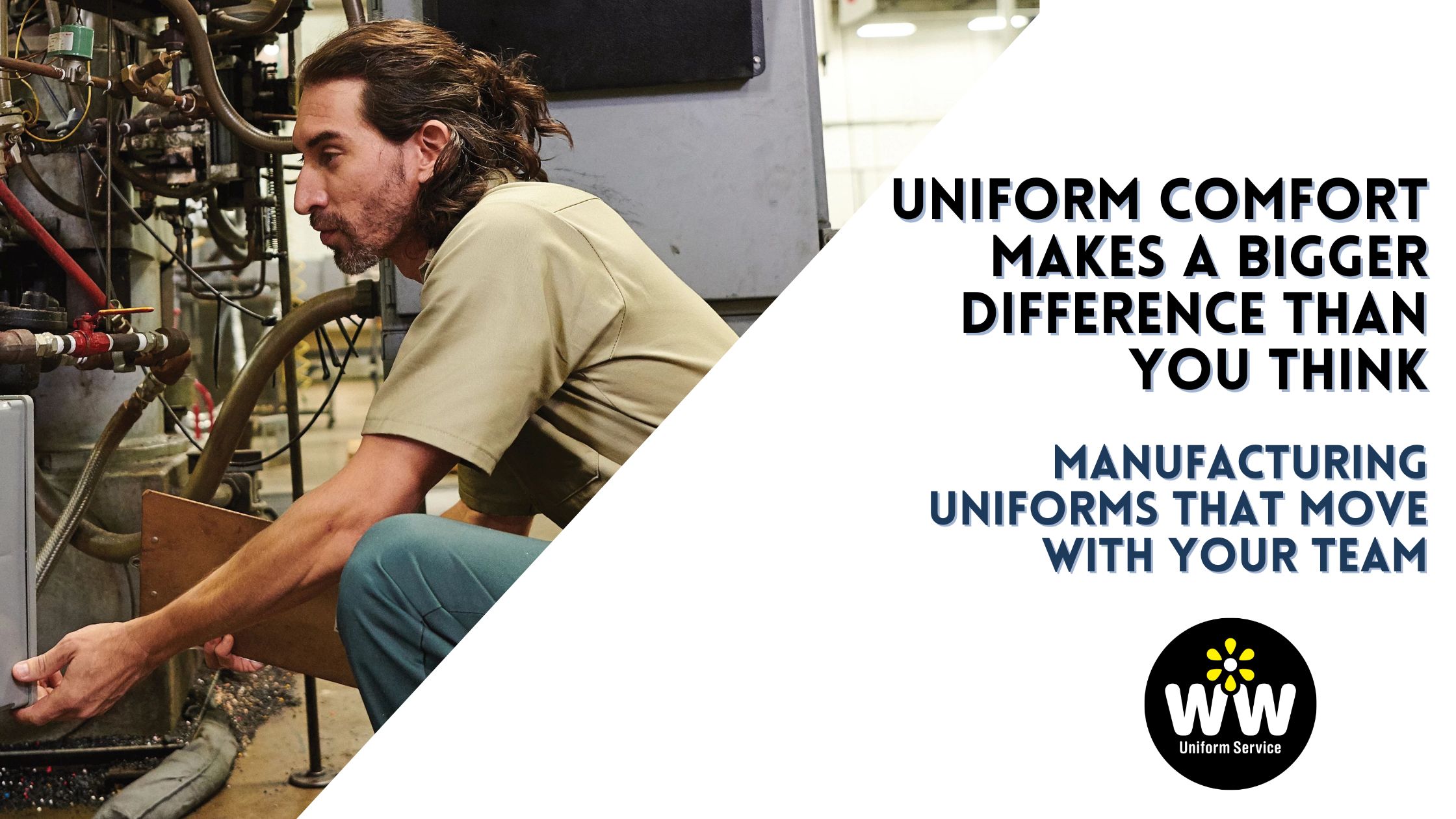
Manufacturing employees spend hours moving, lifting, reaching, bending, standing, and working around equipment. The last thing they need is a uniform that makes any of those tasks harder.
Uniforms might seem like a small part of the workday, but employees notice when their clothing is uncomfortable. A shirt that doesn't breathe, pants that restrict movement, or a poor fit can become a constant distraction during a long shift.
A well-designed manufacturing uniform program can make a difference. The right uniforms should fit well, allow employees to move comfortably, and hold up to the demands of the job. When employees feel comfortable in what they're wearing, they have one less thing to think about during the workday.
What Makes a Manufacturing Uniform Comfortable?
Comfort looks a little different on a manufacturing floor than it does in an office. Employees need uniforms that can keep up with physical work while still providing a professional appearance.
A few things matter most:
- Mobility: Employees need to bend, reach, lift, and move without feeling restricted.
- Breathability: Fabrics that allow airflow can help employees stay more comfortable during physically demanding work.
- Proper fit: Uniforms should provide enough room to move without being oversized or getting in the way.
- Durability: Comfortable doesn't mean delicate. Manufacturing uniforms need to withstand frequent wear and industrial laundering.
- Practical design: Pockets, closures, fabric weight, and other details can make a uniform more functional for the job.
When these details work together, employees get a uniform designed for how they actually work.
What Makes a Manufacturing Uniform Easy to Move In?
Mobility starts with the uniform itself. The right fabric, fit, and design can make it easier for employees to bend, reach, lift, and move throughout their shift.
When you're evaluating uniforms for your manufacturing uniform program, look for these features.
Stretch Fabrics
Fabrics with a blend of materials such as polyester and spandex can give employees more flexibility as they move, bend, and reach.
Stretch can be especially helpful for employees who spend much of their day climbing, kneeling, lifting, or working in different positions.
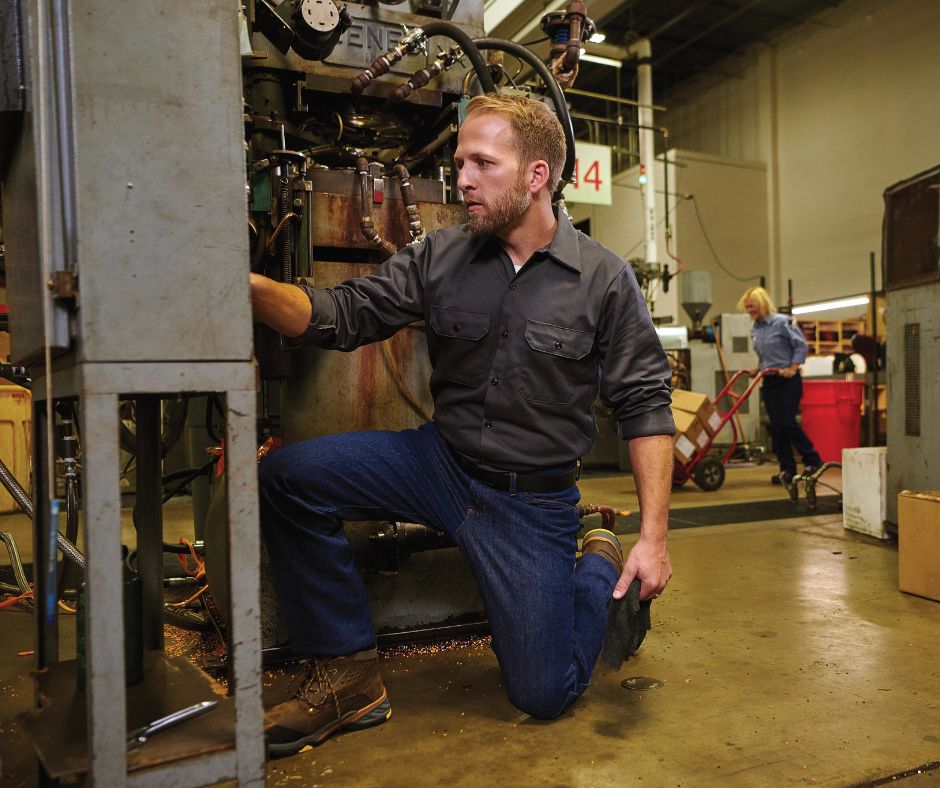
Flex Fit and Articulated Designs
Some uniforms are designed specifically with movement in mind. Flex panels, gussets, and stretch sections can give employees more room to move without making the uniform feel oversized.
These details may seem small, but they can make a noticeable difference during a full shift.
Lightweight, Breathable Fabrics
Fabric weight matters, too. Heavy or non-breathable materials can feel uncomfortable during physical work, especially in warm manufacturing environments.
Lightweight, breathable fabrics can help employees stay more comfortable while they work, while moisture-wicking materials can help manage sweat during more physically demanding tasks.
The Right Fit
Even a flexible fabric won't help much if the uniform doesn't fit correctly.
Employees need enough room through the shoulders, chest, waist, hips, and legs to move naturally. A uniform that's too tight can restrict movement, while one that's too loose can become a safety or comfort issue.
Offering a range of sizes and fits gives employees a better chance of finding uniforms that actually work for their bodies and their jobs.
Design Details Matter
It's easy to overlook the smaller details, but they can affect how a uniform feels throughout the day. Placement of pockets, waistbands, closures, seams, and cuffs can all impact mobility and comfort.
The best manufacturing uniforms are designed around the work employees are doing, not simply how the uniform looks hanging on a rack.
A Quick Uniform Comfort Check
Not sure if your current uniforms are giving employees enough mobility? Try this simple test.
Have employees put on their usual uniform and perform a few normal movements:
- Reach overhead
- Bend or squat
- Kneel
- Stretch across a workstation
- Lift or carry something
- Sit and stand
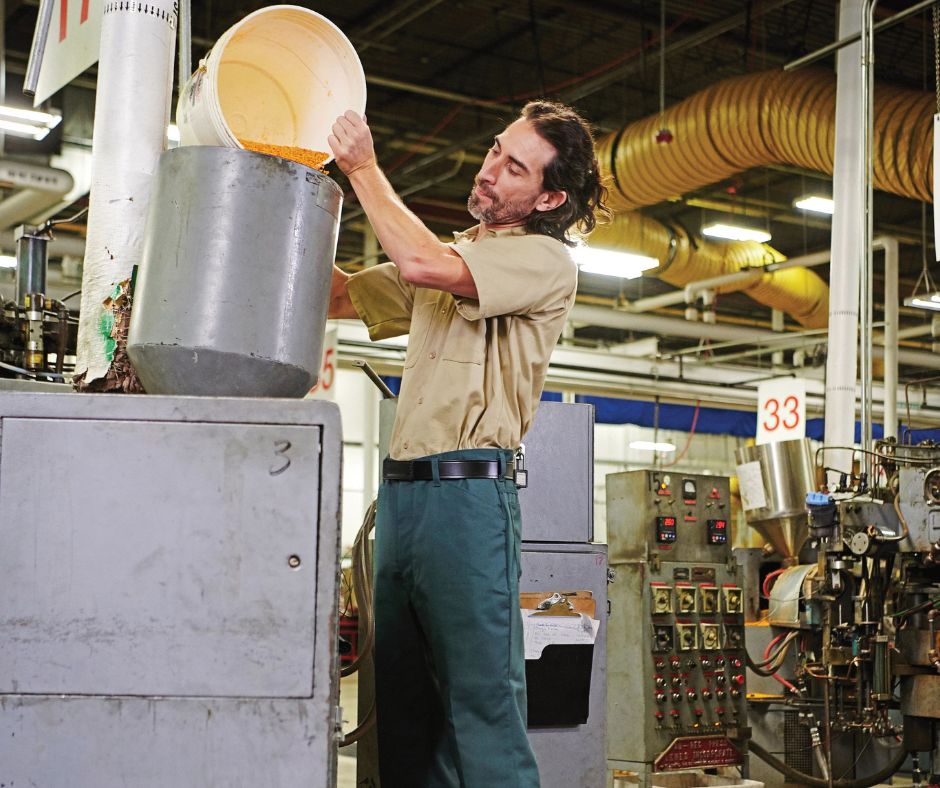
Pay attention to pulling, tightness, bunching, or restricted movement. If employees notice discomfort during these basic movements, it may be time to rethink the fit, fabric, or style of your uniforms.
How Comfortable Uniforms Can Improve Employee Morale
Morale isn't determined by a uniform alone, but small workplace details can influence an employee's day.
Think about it this way: if an employee spends an entire shift adjusting an uncomfortable shirt, pulling at sleeves, or dealing with pants that restrict movement, they're dealing with the same annoyance over and over again.
A comfortable uniform removes some of those little distractions.
Employees Can Focus on the Job
Manufacturing requires attention to detail. Employees need to focus on equipment, production processes, safety procedures, and the task in front of them.
An uncomfortable uniform creates an unnecessary distraction.
When clothing fits properly and moves with the employee, they can spend less time thinking about what they're wearing and more time focused on their work.
Comfort Can Improve the Workday Experience
Employees may not think about their uniforms when everything is working as it should. That's a good thing.
A comfortable uniform becomes one less frustration during a long shift. Employees can move freely, stay comfortable, and get through their workday without constantly adjusting their clothing.
A Consistent Uniform Can Build Team Identity
Uniforms also help employees feel like part of the team. A consistent, professional appearance creates a shared identity across the facility and makes it easy to recognize employees and their roles.
When those uniforms are comfortable and fit well, employees can feel good wearing them, too.
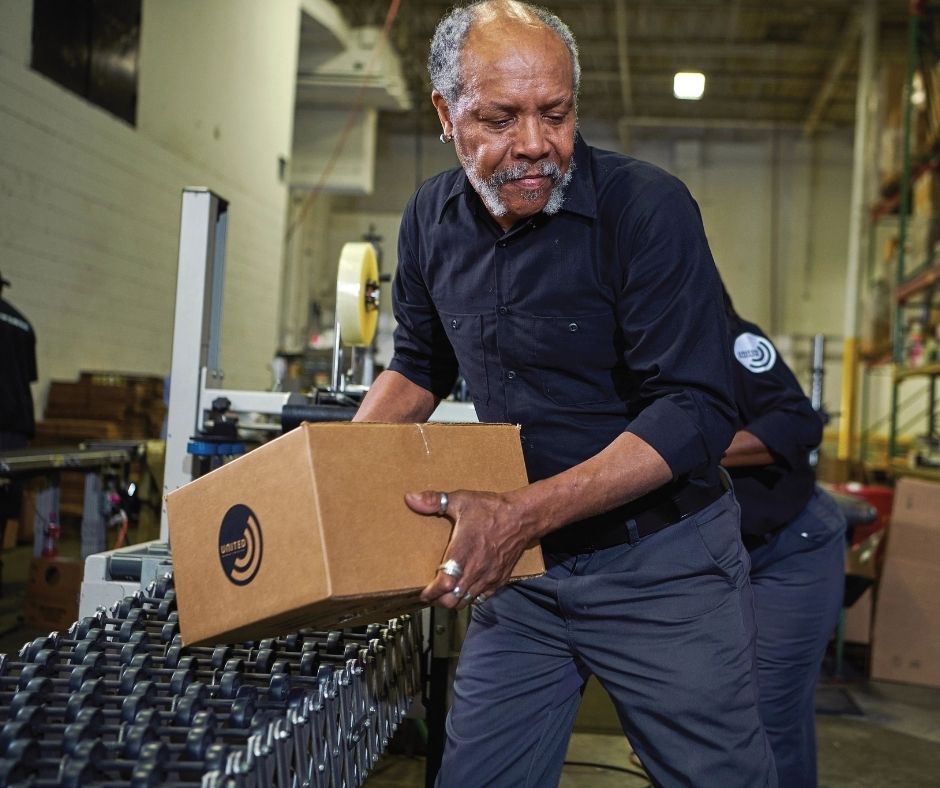
5 Things to Look for in Your Manufacturing Uniform Program
1. Do Employees Have Room to Move?
Watch how employees move through their normal tasks. Are uniforms pulling across the shoulders? Do pants restrict movement when employees bend or kneel?
Uniforms should support the work, not get in the way of it.
2. Are Employees Comfortable During Their Entire Shift?
A uniform might feel fine when an employee first puts it on, but how does it feel several hours later?
Consider the fabric weight, breathability, temperature inside the facility, and the physical demands of the job.
3. Are Employees Wearing the Right Size?
Proper fit matters for both comfort and appearance. Your uniform provider should make it easy for employees to get the right size and replace uniforms when their needs change.
A good manufacturing uniform program should account for the people wearing the uniforms.
4. Can the Uniform Handle the Work?
Comfort only matters if the uniform can keep up.
Manufacturing uniforms need to withstand frequent wear, repeated laundering, and the specific conditions of the workplace. A uniform that wears out quickly can create frustration for employees and additional costs for your company.
5. What Do Employees Think?
Your employees are the ones wearing the uniforms every day, so ask them.
A quick survey can help you identify problems you may not see from a management perspective. Ask questions like:
- Do your uniforms fit comfortably?
- Can you move easily while working?
- Do you get too hot during your shift?
- Are there certain uniform pieces you prefer?
- Is there anything you'd change about your current uniforms?
Their answers can help you make smarter decisions when updating your uniform program.
Build a Manufacturing Uniform Program Around Your Team
Your employees know what works and what doesn't. Their uniforms should reflect the work they do every day.
A successful manufacturing uniform program considers comfort, mobility, fit, durability, appearance, and employee feedback. When those pieces come together, employees get uniforms they can actually work in, and your company gets a consistent, professional program that's easier to manage.
At WW Uniform Service, we help businesses build uniform programs around the needs of their employees and workplace. Our team can help you find the right styles, fits, and service options for your facility, then handle the ongoing laundering and uniform management.
The right uniform shouldn't be something employees have to think about all day. It should simply work.