How Industrial Uniform Programs Improve Safety and Efficiency in Manufacturing Environments
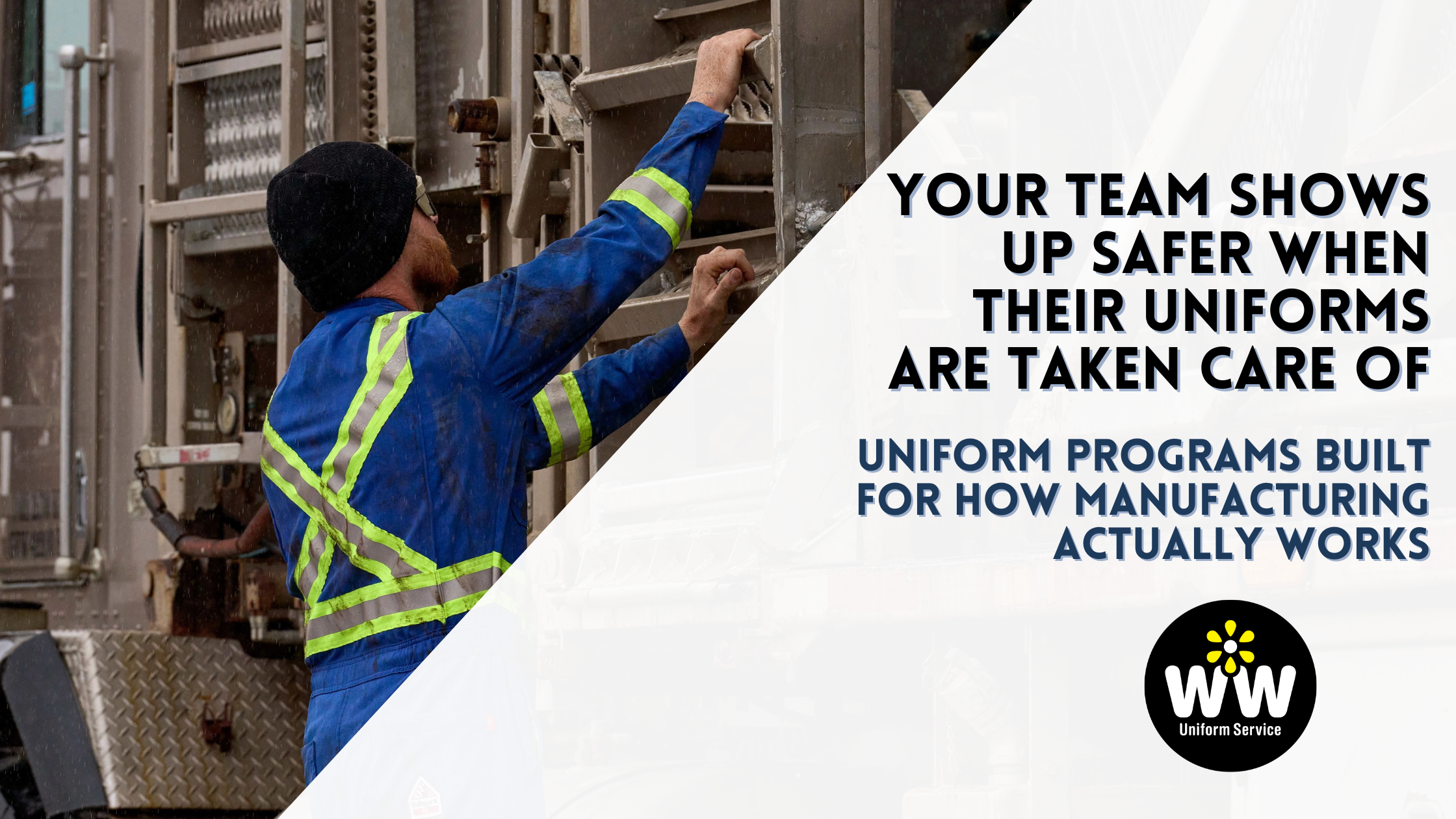
Manufacturing environments are demanding on people, on equipment, and yes, on the clothes your team wears every day. Uniforms take the brunt of grease, heat, chemical exposure, and the fast pace of production. What your team wears is a safety tool, a compliance asset, and a direct reflection of how well your operation runs.
Industrial uniform rental programs take the guesswork (and the tough work) out of keeping your workforce properly outfitted. Let's break down exactly how these programs improve both safety and efficiency, and why so many manufacturing operations across Connecticut, Massachusetts, Rhode Island, and New York have made the switch.
Uniforms Are a Safety Tool - They Need to Be Treated Like One
Most operations leaders know that wearing the right gear matters, but there's a big difference between knowing it and actually making sure it happens every single shift, for every single employee.
A well-run industrial uniform program builds safety into the daily routine.
Every garment is inspected at every wash. When uniforms come back to be laundered, they get cleaned and inspected for rips, tears, missing buttons, and fraying seams. A torn cuff can catch on machinery. A missing button on a flame-resistant (FR) jacket can leave skin exposed to arc flash or open flame. Every item is evaluated before it goes back to your team.
Proper sizing isn't an afterthought. Ill-fitting uniforms are a genuine safety hazard. Pants that are too long create trip risks. Shirts that are too loose can snag on equipment. With a rental program, employees are measured and fitted properly from day one and if someone's size changes, their uniforms are swapped out at the next delivery. No one ends up wearing gear that doesn't fit just because it's "close enough."
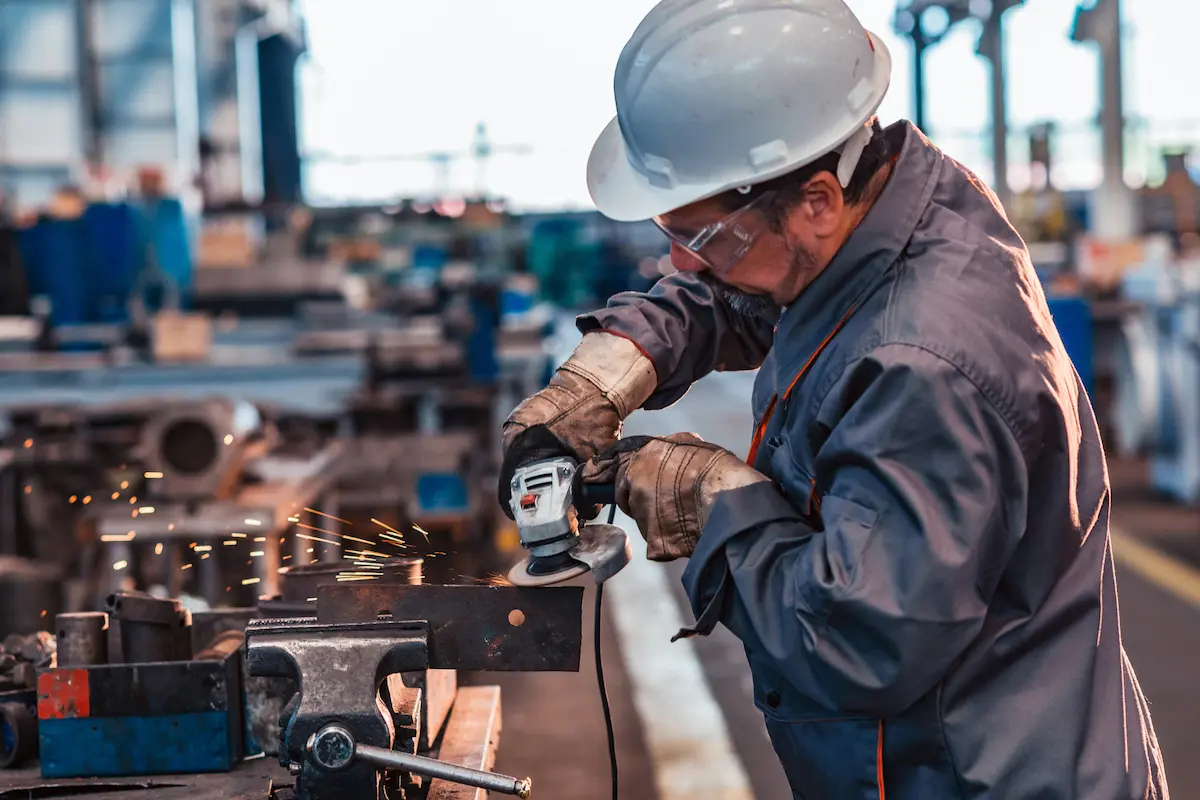
Specialized safety garments are handled correctly. FR clothing and high-visibility gear have specific care requirements that home washing simply can't meet. The flame-resistant properties of apparel can be compromised if the garment is incorrectly laundered or repaired, and in any case, will diminish to the point of ineffectiveness after many washings. The same goes for hi-vis gear — abrasive washes can reduce reflectivity over time. Industrial laundering follows manufacturer specifications every time, so the gear that's supposed to protect your team actually does.


How Uniform Rental Programs Keep You Compliant on Safety Standards
OSHA and industry-specific safety standards require certain types of protective clothing in specific environments. OSHA FR clothing requirements spell out which employees must wear FR gear, what kinds of tasks require it, and how employers should ensure proper use. If a worker is exposed to fire or arc flash hazards, OSHA expects the employer to provide appropriate protection — and noncompliance can result in serious penalties and, more importantly, worker injuries.
An industrial uniform program simplifies compliance in a few important ways. You're working with a provider who knows the standards — FR gear, hi-vis clothing, and other specialized items are sourced and maintained to meet current regulatory requirements. Also, damaged or non-compliant garments are pulled automatically. You're not relying on employees to self-report a torn hi-vis vest or a jacket that's lost its flame resistance after too many home washes.
Rips or contamination from flammable materials can make clothing ineffective, and OSHA can issue violations if clothing doesn't meet the proper standards. When an inspector or auditor comes knocking, having a documented, professional uniform program in place is a very different conversation than "we tell employees to wash their own gear."
A Uniform Program Built for Manufacturing Efficiency
Safety is the headliner, but the efficiency benefits of a managed uniform program are just as significant for operations leaders.
No more uniform inventory management. Tracking sizes, managing stock, ordering replacements when items wear out, all of that disappears. Replenishment happens automatically as part of the service.
New hires are ready faster. There's nothing worse than a new employee waiting days for proper gear because ordering got backed up. With a rental program, new hires are measured and fitted as part of onboarding, and their uniforms arrive on the next scheduled delivery.
Turnover doesn't create a uniform graveyard. When someone leaves, their uniforms go back into rotation. You're renting, not buying, so there's no closet full of gear in sizes nobody currently needs and no write-off for lost investment.
Your team can focus on their actual jobs. When employees don't have to worry about washing their work clothes at home, especially heavy industrial gear that takes a beating and requires specialized care, that's one less stressor in their day. They show up with clean, ready-to-wear uniforms and can focus on what they're there to do.
Industrial Uniform Program FAQs
What is included in an industrial uniform program?
An industrial uniform program includes the uniforms themselves (work shirts, pants, coveralls, shop coats, and specialty items like FR or hi-vis gear) along with professional laundering on a regular schedule, garment inspection and repair, automatic replacement of damaged or worn items, proper employee sizing and fitting, and scheduled delivery and pickup from your facility. We also offer bundled facility supplies like floor mats, shop towels, first aid, PPE and mops through the same service.
How do FR uniforms protect workers?
Flame-resistant (FR) uniforms are made from fabrics engineered to self-extinguish when exposed to flames or electric arc — rather than melting or continuing to burn. According to OSHA, the use of FR clothing greatly improves the chance of a worker surviving and can significantly reduce both the extent and severity of burn injuries to the body. However, FR protection is only effective when:
- Garments are properly maintained and laundered according to manufacturer specifications
- Items are in good condition — no rips, holes, or worn areas that compromise the fabric
- The full garment is worn correctly, with closures fastened to prevent skin exposure
How often should industrial uniforms be laundered?
For most industrial environments, uniforms should be professionally laundered at least once per week. In environments with heavy soil, chemical exposure, or strict hygiene requirements (such as food processing), more frequent laundering may be necessary. Professional industrial laundering is significantly more effective than home washing — commercial equipment operates at higher temperatures and uses industrial-grade detergents that break down grease, oil, and chemical residue that home machines simply can't handle.
Ready to Run a Smarter Manufacturing Uniform Program?
Safety and efficiency aren't competing priorities, and the right uniform program supports both. When your team is properly fitted, wearing gear that's been professionally cleaned and inspected, and never showing up to a shift in a uniform that's compromised or non-compliant, you've eliminated an entire category of preventable risk.
At WW Uniform Service, we've been helping manufacturing operations, automotive facilities, food processing plants, and industrial environments across the East Coast keep their teams safe and ready for work for over a century. We're a local, family-owned company that builds programs around how your operation actually runs.
Ready to simplify your uniform program and strengthen your safety compliance? Let's talk!
More Blog Posts You May Be Interested In

Cold-Weather Workwear: What Belongs in a Winter Uniform Program?
How Comfortable Manufacturing Uniform Programs Improve Morale
Benefits of Microfiber: Why More Manufacturers Are Making the Switch

Uniforms for Restaurants: What to Expect From Your Provider

National Safety Month: Why Your Uniform Program Is Part of Your Safety Plan